If you talk to anyone who has tried running a gym business in India, the conversation usually turns honest after a few minutes.
It starts well – good location, decent launch, strong initial response. But then slowly, the problems creep in.
Members stop showing up. Renewals drop. New sign-ups only come in when discounts are pushed harder. And before long, the entire business starts depending on offers just to stay alive.
This isn’t rare. It’s actually the default story.
Which is why, over the last few years, a different kind of investor has started looking at fitness – not as a passion project, but as a business that needs structure, predictability, and long-term stability.
And that’s exactly the gap KRIS GETHIN GYMS walks into.
Not by trying to be louder. But by quietly fixing the parts most gyms never really solved.
About KRIS GETHIN GYMS
KRIS GETHIN GYMS doesn’t feel like a typical franchise brand when you look closely.
There’s no sense of “sell the name and move on”
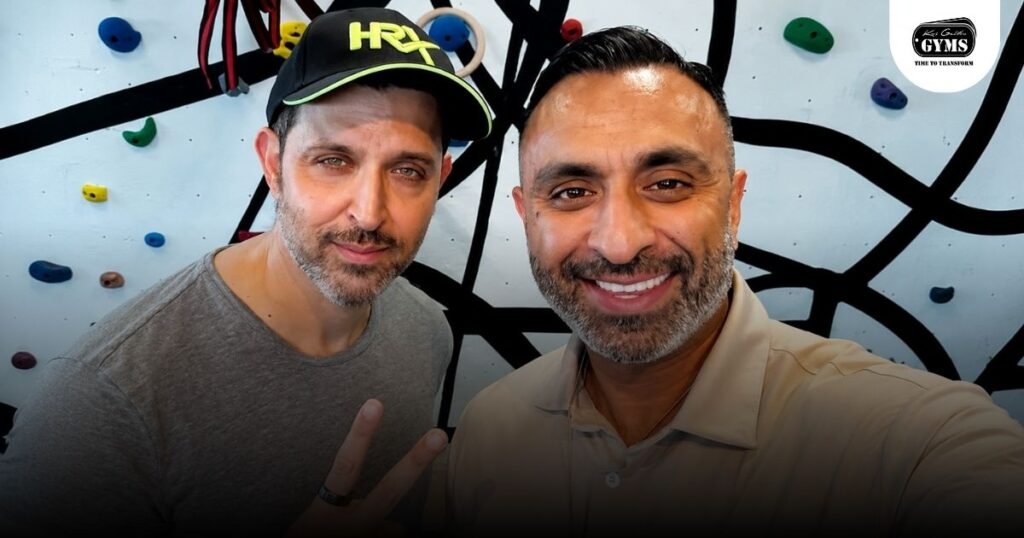
Instead, there’s visible involvement from the people behind it – Kris Gethin himself, and Jag Chima, who’s deeply involved in how the brand is being built and scaled across India.
That detail matters more than it sounds.
Because in most franchise models, once you sign, you’re largely on your own to figure out what works in your city. Here, the people who built the system are still part of how it runs.
So you’re not just buying branding. You’re stepping into something that’s actively being shaped.
The Problem Most Gym Businesses Don’t Admit
There’s a reason so many gyms look busy but still struggle.
They’re built around access – not outcomes.
People pay, show up for a few weeks, then disappear. The gym still has their money, so on paper things look fine. But over time, this cycle creates instability.
You constantly need :
New members to replace the ones who stopped coming
Discounts to attract attention
Offers to stay competitive
And eventually, margins start shrinking.
What’s missing in most setups is a reason for people to stay.
Not motivation. Not hype. Actual, visible progress.
Where KRIS GETHIN GYMS Changes the Equation
The shift is subtle, but it runs through everything.
Instead of asking, “How do we get more people in?”
The question becomes, “How do we make sure people don’t want to leave?”
That one change influences:
And ultimately, the kind of business it becomes.
The Kris Gethin Factor – Beyond Just a Name
A lot of brands use a face. Few bring a method with it.
Kris Gethin’s work with transformations – including well-known names like Hrithik Roshan, John Abraham, and Arjun Kapoor – isn’t just about visibility. It’s about credibility in results-driven training.
But what actually carries forward into the gyms is his approach.
Structured programs. Measurable progress. Clear phases of transformation.
So members aren’t guessing what to do every day. They’re following something that has already been tested in high-performance environments.
And when that clarity exists, people tend to stay longer.
Jag Chima – The Part Most People Don’t See
If Kris Gethin represents the training philosophy, Jag Chima represents execution on the ground.
And that’s where many fitness brands struggle – not in vision, but in consistency.
Jag Chima’s involvement ensures that what’s promised at the brand level actually shows up in the day-to-day operations :
How the gym is set up
How teams are trained
How systems are followed
It reduces that usual gap between “what was sold” and “what actually happens.”
For an investor, that gap is where most problems begin. Here, it’s actively managed.
The Military Systems Ideology – Not As Dramatic As It Sounds
The term can feel intense at first, but in practice, it’s surprisingly practical.
It’s not about shouting instructions or creating a harsh environment.
It’s about removing randomness.
Most people in regular gyms :
The military-style thinking here focuses on :
And that has a very direct effect – people start seeing results.
When results show up, behaviour changes. Attendance improves. Renewals follow naturally.
And suddenly, the business doesn’t have to push as hard to keep people engaged.
Why This Model Holds Up Financially
Here’s where things get interesting from an investor’s perspective.
Most gym businesses depend heavily on volume – more members, more revenue.
But volume comes with pressure :
KRIS GETHIN GYMS works differently.
Because :
The business doesn’t need to chase numbers the same way.
That’s how you start seeing :
Faster recovery timelines (closer to a few years, not half a decade)
Stronger annual returns when executed properly
Revenue even before launch through structured pre-sales
It’s less about luck. More about design.
The Premium Positioning – And Why It Matters
A lot of gym owners hesitate to price higher.
The fear is simple: “What if people don’t join?”
But what usually happens is the opposite.
Lower pricing attracts :
Short-term members
Low commitment
High dropout rates
Premium pricing filters that out.
It attracts :
People who are serious
People who show up
People who stay
And from a business standpoint, that changes everything.
Less churn. Better margins. Stronger community.
The Indian Market Is Ready for This Shift
This kind of model wouldn’t have worked the same way 10 years ago.
Back then, price sensitivity dominated everything.
Now, especially there’s a visible shift :
People are willing to pay for quality
Results matter more than discounts
Environment and experience matter
KRIS GETHIN GYMS fits right into this transition.
Not as an alternative – but as a next step.
It Doesn’t Feel Like a “Set and Forget” Franchise
And that’s probably the biggest difference.
Most franchises are designed to scale quickly, often at the cost of consistency.
Here, growth feels more controlled.
Because :
Founders stay involved
Systems are enforced
Execution is monitored
So instead of expanding fast and fixing later, it builds steadily.
For some investors, that might feel slower.
But for most, it feels safer.
Conclusion
At a surface level, KRIS GETHIN GYMS looks like another premium fitness brand in India.
But when you spend time understanding how it’s built, it starts to feel different.
Less like a gym you open. More like a system you step into.
There’s clarity in how training works. There’s structure in how the business runs.
And there’s involvement from the people who built it – not just at the start, but along the way.
And in a space where most gyms are still figuring things out as they go, that kind of clarity isn’t common.
Which is exactly why it’s getting attention.