Most first-time gym investors plan carefully for the build and hardly at all for the year after opening. The model usually fails in that second stretch, not on the day the doors open.
The gym franchise business model in India is an arrangement in which a franchisor licenses its brand, systems and training to an investor, who builds and runs a fitness centre in an agreed territory under that brand.
Understanding its structure, its risks and its demands on the operator is what separates a sound investment from an expensive experiment.
This guide sets out how the model works and what disciplined partners examine before they commit.
India’s Fitness Market Rewards Organised Operators
The 2025 India Fitness Market Report from Deloitte India and the Health & Fitness Association projects commercial fitness revenue rising from INR 16,200 crore in 2024 to INR 37,700 crore by 2030.
That implies growth of roughly 15 percent a year. The same research notes that paid facility membership still reaches under one percent of the population.
Two conclusions follow. The runway is long, and the market is far from saturated by organised operators, which is where a recognised brand and a tested system carry real weight.
Boutique formats are the fastest-growing segment, at close to 19 percent a year, with premium formats also expected to grow strongly.
How the Gym Franchise Business Model Works
Two parties carry the model. The franchisor owns the brand, the intellectual property, the standard operating procedures and the training. The franchisee supplies local capital, manages daily operations and builds the market in the assigned territory.
The relationship works only when both sides are bound by standards. At KRIS GETHIN GYMS those standards cover coaching quality, member experience and brand presentation, because one weak outlet damages every other outlet carrying the name.
FOFO and FOCO : Choosing Your Level of Involvement
Indian fitness franchises generally follow one of two operating structures.
Under FOFO (franchise owned, franchise operated), the investor funds the build, runs the centre and keeps the profit, while the brand provides systems, marketing support and vendor access.
Under FOCO (franchise owned, company operated), the investor funds the build while the brand manages staffing and operations, usually in exchange for a revenue share or a minimum guarantee.
A gym is a people business, and one thing we see across the industry is that outlets with an engaged owner recover from early setbacks faster. FOCO suits passive investors, though terms vary widely.
The structures a brand offers should always be confirmed directly with the franchisor.
What a Premium Format Demands
A premium gym is judged the moment a member walks in, so the physical standard has to be right from day one.
That means a site with enough floor area and load capacity for serious strength equipment, ceiling height and ventilation suited to intense training, and a layout that separates training, recovery and reception areas cleanly.
It also means a technology layer for access control, member records and progress tracking, and a coaching team recruited and educated to the brand’s standard before the first member joins.
The brand’s role is to specify and support this. The partner’s role is to execute it without compromise.
Retention Decides the Outcome
Opening day attracts attention. The following twelve months determine the result.
Exercise adherence research has long reported that roughly half of people who start a new exercise programme stop within six months.
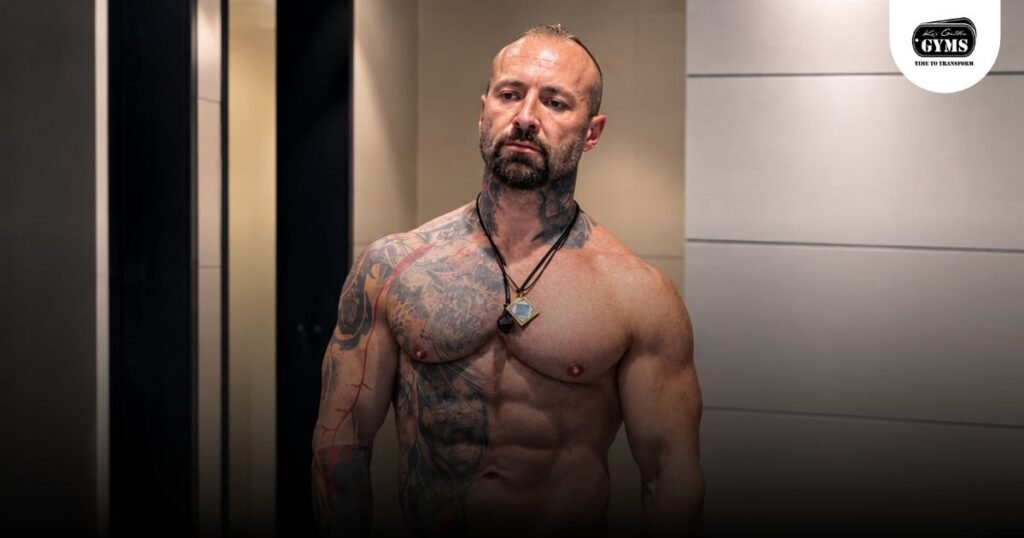
Every departing member has to be replaced, and replacement is harder than retention. Coaching attention, visible progress tracking and accountability, the principles Kris Gethin has always applied to transformation, are what keep members training and the centre stable.
Prospective partners should examine a franchisor’s retention practices as closely as its marketing.
Revenue Beyond the Membership
Centres that rely on memberships alone tend to struggle. A well-structured franchise builds several revenue streams around the core offer.
- Tiered memberships across monthly, quarterly and annual terms
- Personal training packages, often the highest-margin line
- Nutrition consulting and body composition analysis
- Physiotherapy and recovery partnerships
- Retail, including supplements, a health cafe and branded apparel
- Corporate wellness agreements with nearby offices and technology parks
A transformation-led brand is well placed to build these streams, because members are paying for results rather than access.
Location Strategy Across Tier-1 and Tier-2 Cities
In Tier-1 metros such as Mumbai, Delhi-NCR, Bengaluru and Hyderabad, convenience and corporate proximity drive membership. High-street blocks, upscale residential complexes and tech corridors perform well, and professionals expect early morning and late evening availability.
Tier-2 cities such as Pune, Ahmedabad, Lucknow, Indore and Chandigarh offer a different equation. Aspiration for premium fitness is strong, price sensitivity is real and competition is thinner, which rewards partners who establish themselves early. Malls and emerging residential corridors with ample parking are the usual choices.
From Agreement to Opening Day
Disciplined partners follow a clear sequence.
Brand due diligence. Review the disclosure documents and the franchise agreement, and speak with existing partners about retention, support and results.
Site selection. Confirm floor load capacity for heavy equipment, ceiling height of at least ten feet, reliable water supply and parking.
Licences. Requirements differ by state and municipality, but typically include a Shop and Establishment licence, a trade licence, a Fire NOC, a society NOC for residential zones and GST registration.
Pre-launch. Begin marketing 30 to 45 days before opening. A measured founding-member offer builds early momentum, while heavy discounting weakens premium positioning for years.
Choosing a Partner Brand With Discipline
Investors who evaluate a brand on retention, coaching standards and post-launch support tend to choose well. The model rewards patience, standards and close attention to the member.
Prospective partners are invited to review the KRIS GETHIN GYMS franchise opportunity in detail with our team.