A wealth manager based out of Mumbai once described his client conversations to me in a single sentence.
Everyone wants yield. Nobody wants to talk about where yield actually comes from anymore.
That’s the real shift happening across Indian HNI portfolios right now. Fixed deposits sit somewhere close to negative real returns once you account for tax and inflation.
Residential property in the top metros barely clears 2 to 3 percent rental yield, and that’s before the tenant calls at midnight. Equity markets deliver headline numbers that look attractive until a single macro shock wipes out two years of gains in a quarter.
Somewhere in that gap, cash-flowing commercial business investments have started pulling serious capital.
Within that category, gym franchise in India has quietly become one of the more interesting places for that capital to sit.
Where the Old Playbook Stopped Working
For a generation, the standard HNI allocation looked the same.
Property for stability, equities for growth, fixed income for safety. That formula assumed each asset class would keep doing its job indefinitely.
It hasn’t held up.
| Traditional Asset | The Core Problem |
|---|
| Residential Real Estate | 2% to 3% rental yield, 30+ year payback, high maintenance and tenant risk |
| Commercial Real Estate | Better yield at 7% to 9%, but entry starts at ₹5 to ₹10 Crore |
| Equities / Mutual Funds | High liquidity, but exposed to macro shocks and capital gains tax on exit |
| Fixed Deposits / Bonds | Post-tax returns rarely outpace real inflation in the highest brackets |
None of these are broken asset classes. They’re just no longer doing the job they used to.
Running the Numbers Side by Side
This is where the comparison gets uncomfortable for anyone still leaning heavily on traditional holdings.
| Investment Metric | Residential Real Estate | Mutual Funds / Equities | Commercial Real Estate | Luxury Gym Franchise in India |
|---|
| Average Annual Yield | 2% – 3% | 12% – 15% (volatile) | 7% – 9% | 35% – 45% |
| Capital Payback Window | 30+ years | Variable, no fixed payback | 11 – 14 years | 2.5 years |
| Cash Flow Frequency | Monthly, low velocity | High, but market-linked | Monthly, stable but flat | Daily and monthly, high velocity |
| Tax Treatment | Taxable rental income | Capital gains tax on exit | Income tax on rental yield | Business depreciation benefits2 |
A luxury gym franchise, built on a starting capital layout of ₹2 Crore, is engineered to deliver cash-flow yields in that 35 to 45 percent band, a figure that simply doesn’t exist in residential property, commercial real estate, or fixed income at any comparable risk level.
The payback window tells a similar story. Residential real estate can take upward of thirty years to return capital through rental income alone.
A systemized fitness franchise compresses that down to roughly 2.5 years, a gap wide enough to change the entire calculus of how an investor thinks about deploying ₹2 Crore or more.
The Mechanics Behind the Yield
None of this works because fitness is inherently more profitable than real estate. It works because a premium fitness asset runs on a completely different revenue architecture than a single monthly rent check.
| Revenue Driver | How It Contributes |
|---|
| Pre-Launch Member Acquisition | Generates cash flow weeks before doors open, recovering capital before day one |
| High-Tier Memberships | The base layer, priced for premium positioning rather than volume |
| Personal Training Packages | High-margin, recurring revenue independent of standard membership cycles |
| Premium Supplement Retail | Additional channel within the same square footage, buffers seasonal dips |
One thing worth sitting with here. A landlord locked into a long-term lease can’t respond to inflation quickly, the rent stays fixed regardless of what’s happening to input costs.
A luxury fitness brand keeps pricing flexibility because its client base, largely HNI and upper-affluent members, prioritizes transformation outcomes over minor price adjustments.
That elasticity is what protects the 35 to 45 percent margin band even as costs shift underneath it.
The Question Every Serious Investor Asks First
Here’s the objection that comes up in nearly every serious conversation about this asset class. Most HNIs are already running businesses, practicing medicine, or managing multi-generational family enterprises.
Nobody deploying ₹2 Crore is looking to spend their mornings behind a front desk.
That concern is legitimate, and it’s exactly why the distinction between an independent gym and a corporate-backed franchise ecosystem matters so much.
| Operational Layer | Who Carries the Weight |
|---|
| Site Selection | Corporate team audits demographic density and wealth concentration before approval |
| Sales & Lead Conversion | Runs on systemized corporate toolsets, not the franchisee’s personal sales instinct |
| Staff Recruitment & Certification | Handled centrally, isolating the investor from daily floor management |
That’s the piece that makes this asset class genuinely passive-adjacent. Not because the business runs itself, but because the operational weight sits with a system built specifically to carry it.
The Tax Angle Almost Nobody Talks About
For investors sitting in the highest tax brackets, what you keep matters just as much as what you earn. This is where fitness infrastructure holds an advantage real estate and equity simply can’t offer.
Under the Indian Income Tax Act, fitness equipment, interior fit-outs, and climate control systems qualify for meaningful business depreciation allowances.
Offsetting operational profit against that depreciation reduces net tax liability substantially during the early years of the business, a benefit structurally unavailable to a rental property owner paying straight income tax on yield, or an equity investor absorbing capital gains tax on exit.
Where This Actually Lands
Rank a luxury gym franchise honestly against the traditional HNI playbook and it lands somewhere real estate and business ownership have rarely intersected before.
The cash-flow consistency resembles premium commercial property. The yield and payback profile resembles a high-growth business. Very few asset classes deliver both at once.
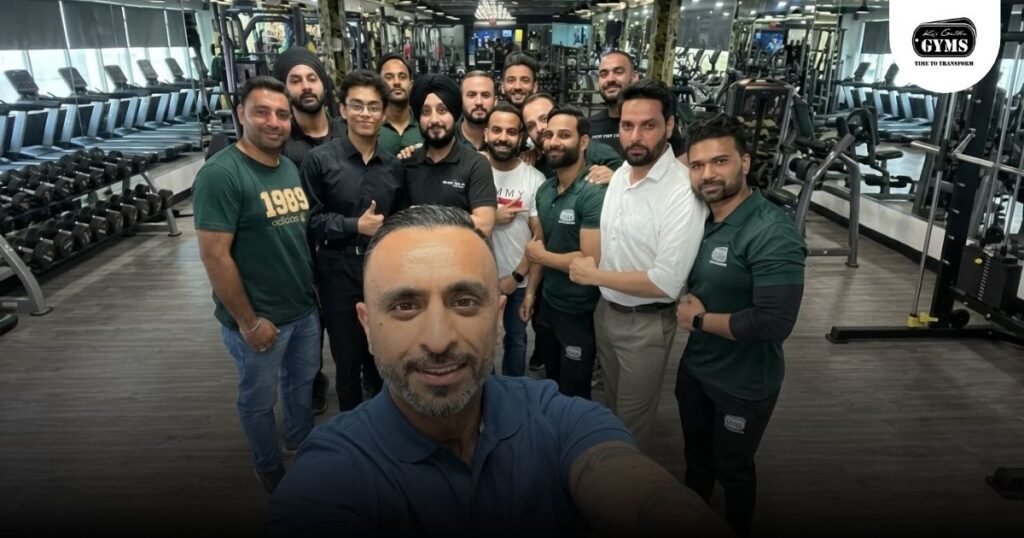
That’s exactly why the environment at KRIS GETHIN GYMS franchise is engineered the way it is, with a corporate system built to carry the operational weight while the underlying economics do the work an investor actually came for.